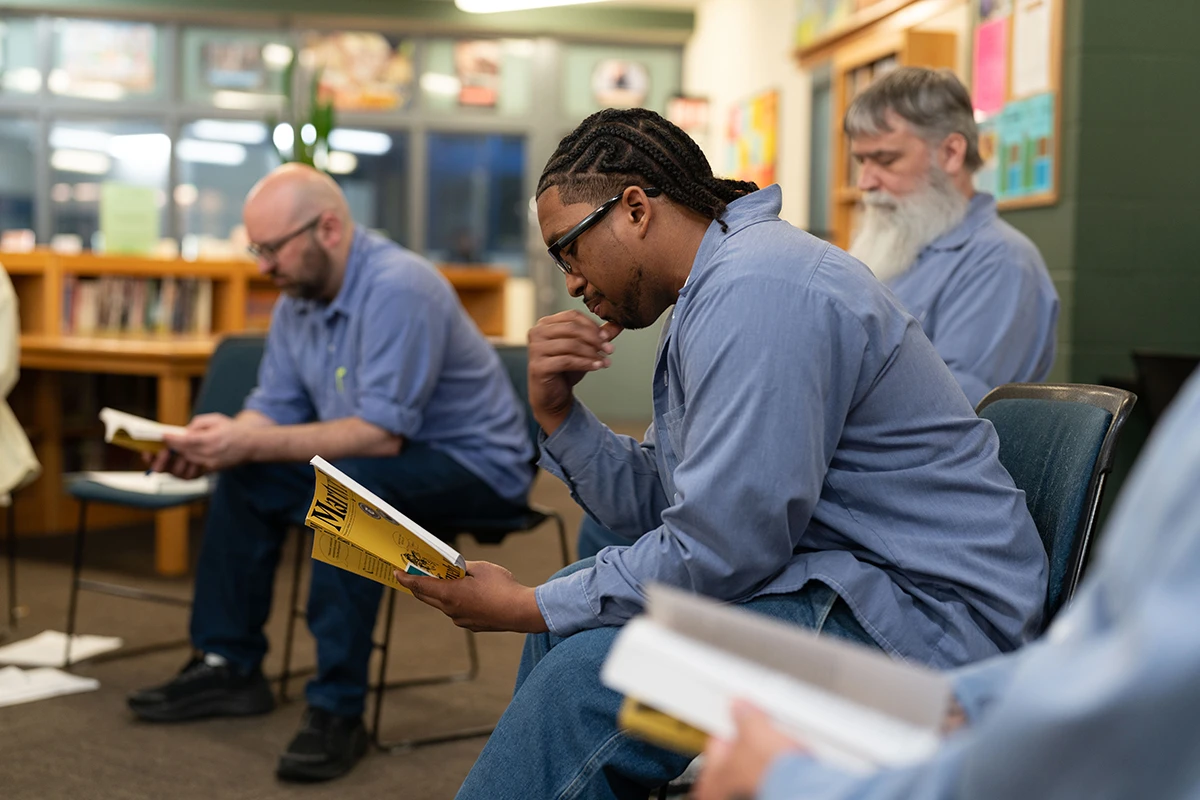
Prisoners judge and are judged all the time. They are no different from anyone else in that regard. What is different is that all of their judgments happen behind prison walls, which obscure the prisoner from almost everything meaningful in life. At least that is how it feels at times. Enough of the time to cause prison to make you ache for connection and meaning in the world outside. The Inside Literary Prize connects incarcerated judges to the literary world in such a meaningful way. That is the sentiment heard again and again when Freedom Reads talks to incarcerated judges from around the country.
Reggie, a judge in Minnesota, spoke about connection and growth when describing “the breathtaking experience” that came from the opportunity to be a judge for the 2026 Inside Literary Prize. His words reminded me how prison starves you of human connection. It's more than just the lack of physical connection. There is often harsh judgment for those who engage in intellectual pursuits.
It is as if the pursuit of knowledge is an attempt to separate oneself from the general prison population. The separation is really about creating distance between the past and the future. More specifically, for most prisoners, engaging in intellectual pursuits is about creating distance between past actions and future decisions. Sadly, even the thought of critical judgment hinders some from taking part in such endeavors when the opportunity to do so exists.
Being alone in prison is worse when your fellow prisoners turn away from you so the threat of that happening, even in the smallest sense, stops some from taking the first steps that lead to potentially life-changing experiences. When a prisoner does step out and take the chance by taking part in certain educational opportunities, it creates the dynamic for which, when certain opportunities are available, it can take your breath away.
Being a judge created space for incarcerated women and men, “to have normal conversations without being judged.” In prison, it is rare to have conversations about books where everyone reads the same book at the same time, as is the case with ILP judges. Talking about how characters express their thoughts and emotions opens up space to talk about your own. It provides the opportunity to learn about different ways of looking at and handling things.
Hearing from others opens the door to the changing of perspectives and opinions. When you get into certain books, it can feel like you got into a school with all the learning you do. Except you go to school with others, but that is the part that is missing so often when it comes to reading. Reading and learning in community allows for expanded growth. Thoughts travel farther in community with others and can have a longer-lasting impact.
Reggie spoke about "growing with the characters.” and that kind of growth is important given the lack of healthy social interaction in prison. Prison is a space that can make you feel like you're in a perpetual state of stagnation. It can get to the point where even the imagination is not a place of escape. Freedom Reads and the Inside Literary Prize Tour came to Minnesota and the judges brought ideas to life. Reggie had the idea, “Hey, one day this could be [me],” and that is a powerful idea indeed. Incarcerated judges take part in the Inside Literary Prize Tour and see possibilities for themselves. As Reggie said, “It gives me inspiration that I could get out and do the same."
To hear from Reggie himself, watch this video.