October 2026 Newsletter
The Books That Bridge Us
Join us this month as we explore how books connect us. Also be sure to check out the final essay in the three-part series, The Disconnect, and the eloquent articulation of the beauty and wonder in Don Quixote de la Mancha. We are sure that you will find something you’ll be glad you read.
By Reginald Dwayne Betts,
Founder & CEO
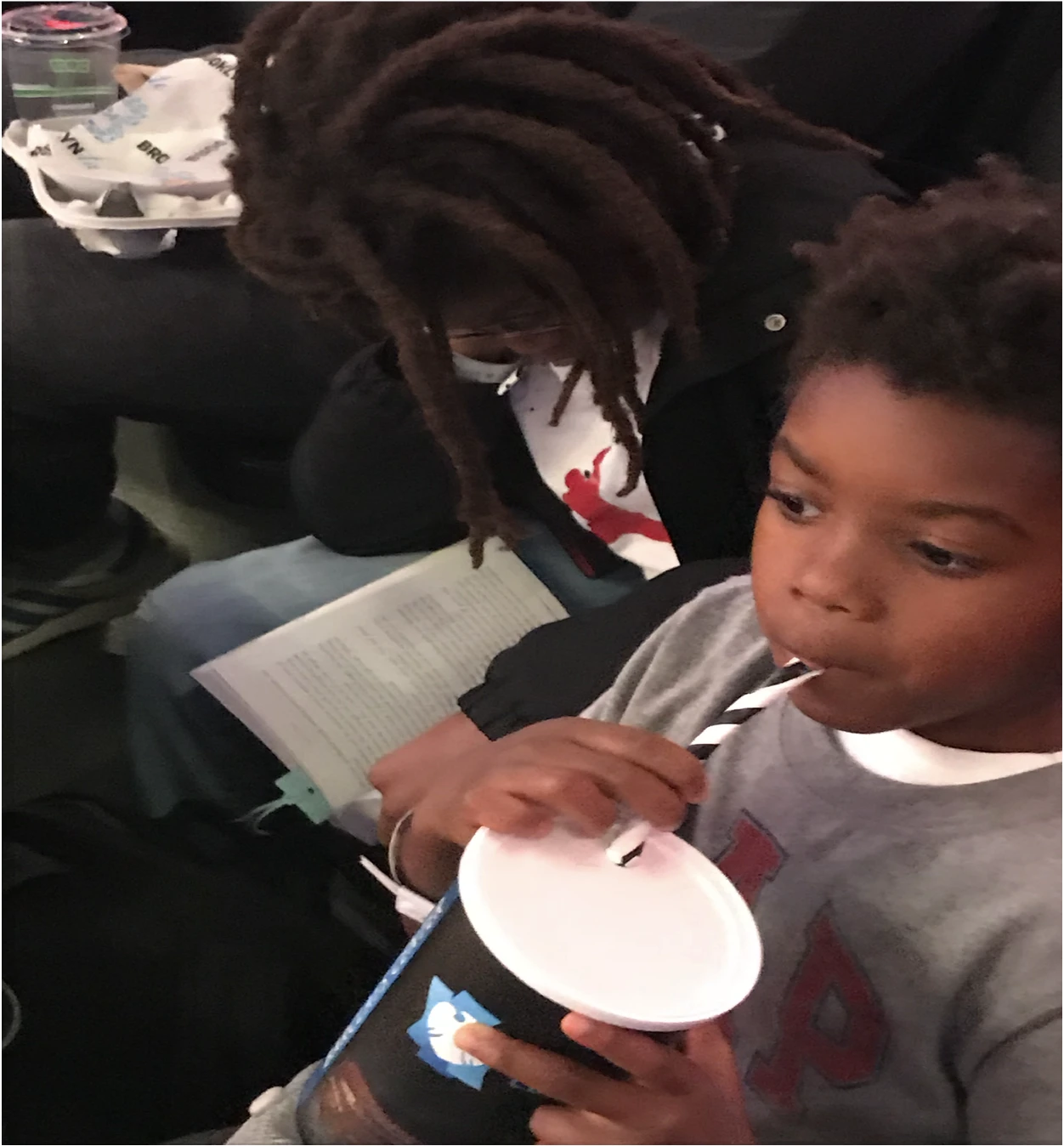
When I saw K reading David McCullough’s 1776, the empty middle seat between us felt like a segment of the Freedom Library: K holding 1776 on one side, me holding Joel Meyerowitz’s How I Make Photographs. “That’s a good book, right?”
He told me how he always liked reading history. I mentioned James Alan McPherson’s classic on the Civil War, and he told me how returning to that war was hard. “A lot of brothers killing brothers.” It made me remember Maine, and how a white man covered in the tattoos I once only associated with prison gangs taught me how to cast a line. We were at a pier overlooking where they once built giant warships. The tattooed man asked if I knew where most Civil War soldiers came from outside the North.
I told K the answer was Maine. Then I told him how Micah was born on the anniversary of the speech that brought this country together. My oldest son breathes in books the way I’ve always done.
I remember teaching him to read. Each night we’d work through sentences in his beloved Pokémon books. I remember a photo I took of him and one of his classmates sitting on a school bench reading the last volume of Harry Potter. They were in third grade. And I remember years later, we’d be at Brooklyn Nets games, and Micah would have a book in hand.
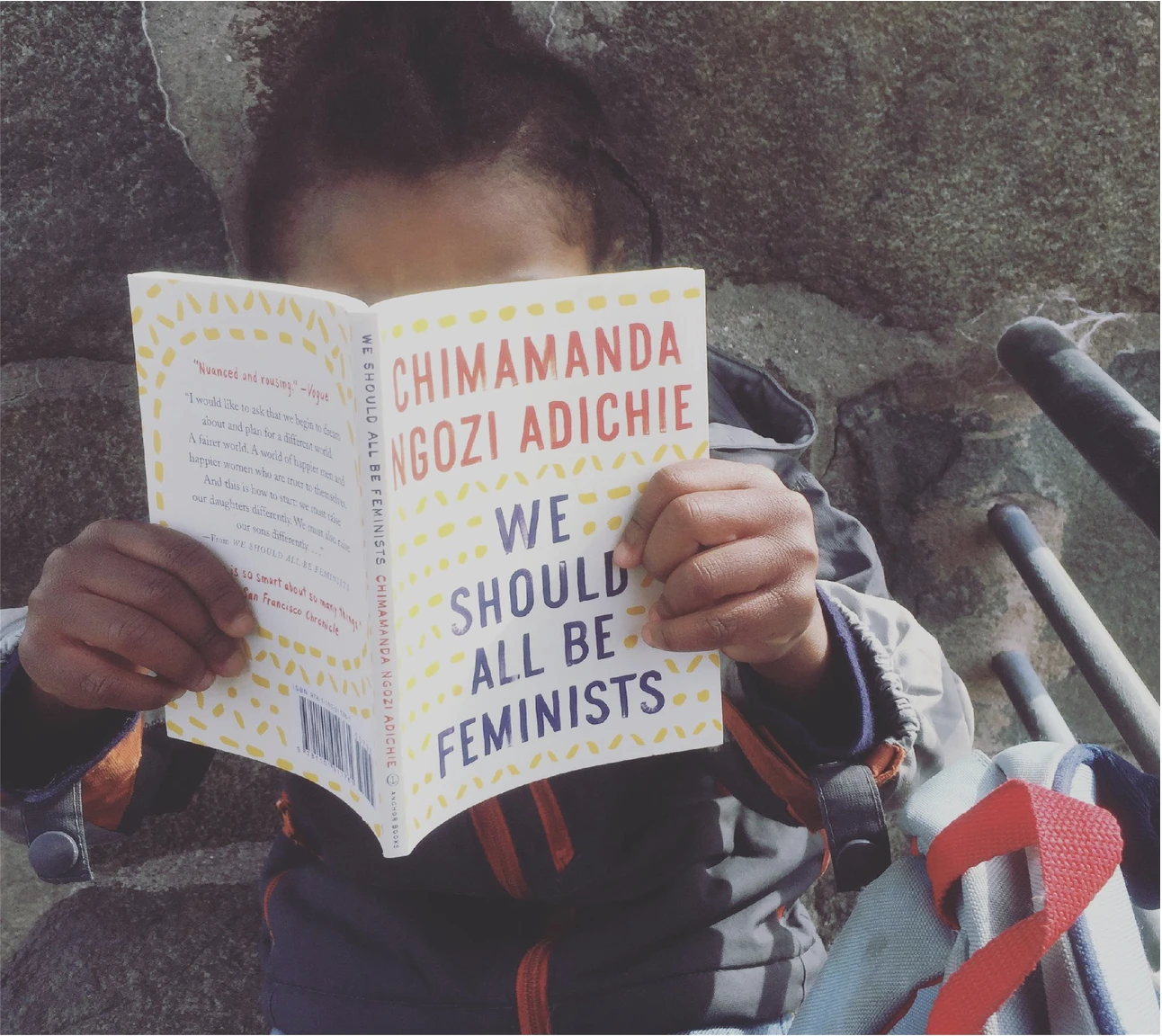
Years later, I decided to get active and do things people in my neighborhood back in PG County ain't really do. We call going in the woods "literally going around back," but I said I was going to go hiking to this place called Sleeping Giant. My youngest son Miles was around 3. Old enough to walk on his own. Young enough to know his outstretched arms guaranteed I was carrying him. Micah, Miles, and I bundled up in the car and headed there. I didn't know that you could read the trail and find out how long it was from point A to point B. It took us more than an hour to make it to the top, and I carried Miles most of the way. We got there, and I took this photo of Miles reading:
Later, when I started Freedom Reads, Micah and Miles helped me box up books. Micah would give me recommendations, and sometimes they loaded the books up and went to the post office with me. This was back when our scene was only two or three, and we had 20, 30, or 40 boxes of 20 books each that I lugged by myself to the post office.
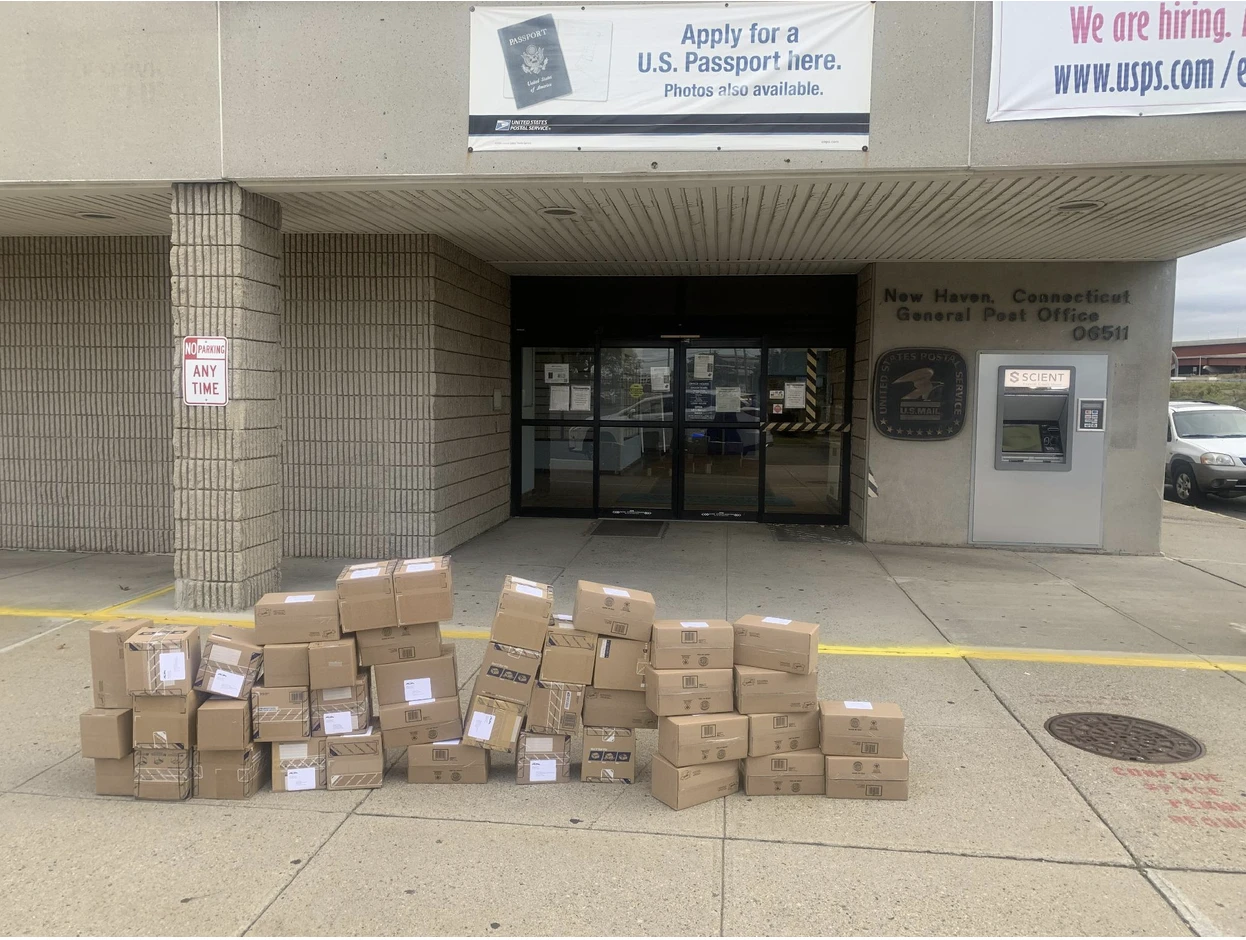
Every one of these boxes contained books my sons watched me box in my small office. They watched me carry the boxes to my truck, load them, and hours later return having shipped hundreds of books to incarcerated readers across the country.
I was on an airplane today, and the person beside me was reading David McCullough's 1776. I told him how we build libraries in prisons, and I described the work.
“I did some time, too.”
And we left it at that. The books we shared were more important than the prisons, but the latter reminds us of the sheer, unassailable power and possibility that comes with turning a page. Just like that, we're reminded that we show up as humans everywhere we show up, and as humans, we show up with flaws, challenges, difficulties, and so much beauty.
By Dempsey Louis
Don Quixote seeks to escape the known world of routine corruption and commonplace disruption by immersing himself in fantastical tales of knights in shining armor, blue moon romances, and a deluxe edition of grand illusions. With his mind stuck in most of his last book, or most of his last book stuck in his mind, Don Quixote summons his loyal servant and true friend, Sancho Panza, to accompany him on a horseback adventure across the dusty badlands of La Mancha, Spain, in search of good times, good vibrations, and goodness knows what else. In the stratosphere of classic, iconic world literature, Don Quixote is the ne plus ultra of adventure because happiness—as we instinctively know and sometimes forget—is not an ideal of reason but of imagination. With long reins in one hand and a longer sword in the other, Don Quixote strides tall in the cowhide saddle of his bullheaded imagination to battle windmills, sheep, and Little Bo Peep. Sancho Panza tries to reason with Don Quixote but to no avail. The man of La Mancha is large and in charge. Pappa’s got a brand-new bag, and he’s doing the monkey, the mashed potato, jump back Jack, see you later, alligator.
Among the many things Don Quixote intensely believes himself to be is a man whose heart is in the right place, though his brain is not. Nevertheless, he is, when all is completely said and positively done, the man of La Mancha! And a man who will inspire you to get on your cowhide-saddled horse, gather the reins, and gallop off into a night where the glitter of stars strewn across the heavens spells out the only three words you’ll ever need to remember: adventure before dementia.
By James Davis III
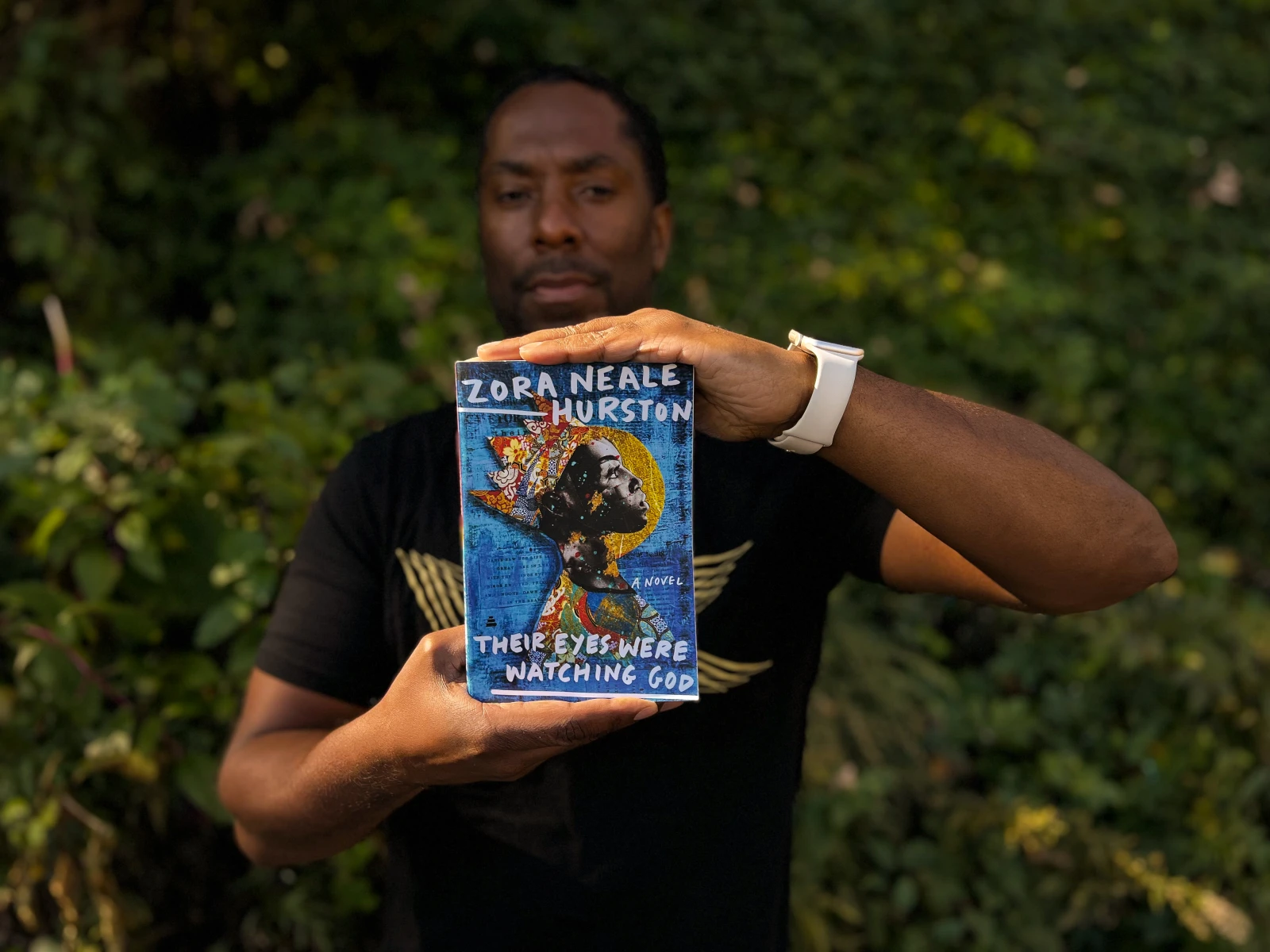
Reading has always been a beautiful way for me to connect to others. The unobtrusive way that I am able to observe the lives of others while learning more about my own life has always struck me as remarkable. Leaving this world for a world woven together from the mind of an author has so often been an invitation I welcomed. Some invitations call me back, and none more so than one book in particular.
Their Eyes Were Watching God by Zora Neale Hurston is a book that tells more than one story as Janie, the protagonist of the novel, moves through time one day after another. The novel begins with Janie as a little girl unsure about her identity and ends with her as a middle-aged woman, secure in her own skin, and teaching her friend about her journey. I say teach because Janie is not just telling a story to be heard. Her story is a life lesson.
Domestic violence permeates Janie’s relationships, and the beauty of Hurston’s storytelling can obscure just how much of a role it plays in Janie’s life. One incident that stands out early in the novel is when Janie’s grandmother is in the process of arranging for 16-year-old Janie to marry an older, widowed man that she strongly objects to. The arranging of such a marriage never struck me as being as violent as the interaction it invokes. Not liking Janie’s response to the news of the marriage, the grandmother reacts. “She slapped the girl’s face violently, and forced her head back so that their eyes met in struggle.” Focusing on the slap caused me to neglect the violence of the arranged marriage for the young girl. Psychologically and emotionally, the news was a tragic introduction to a traumatic series of events. Even as Janie would struggle with her grandmother, she would also struggle with her husband. To the point that Janie walked away from that marriage and married Jodie, a second husband, within 24 hours of leaving the marriage she never wanted.
The beauty of the second marriage was as real as the dreams of a child or a young man with money in his pockets and plans in his head. Janie was happy for years before she realized the happiness she had experienced came at a cost to her person and, in fact, was not the true happiness she knew she was capable of. Again, domestic violence enters the story, and again an aspect of it that had slipped by me previously was brought to sight once looked for.
I had always seen the scene where Jodie slaps Janie as the first incident of domestic violence between them until I thought more deeply about domestic violence. Then Hurston’s words leapt at me as if I had been unable to read before. After suffering a verbal jab from Jodie, Janie reflects, and in that reflection she testifies to what she has endured. “Time came when she fought back with her tongue as best she could, but it didn’t do her any good. It just made Joe do more. He wanted her submission, and he’d keep on fighting until he felt he had it.”
The verbal abuse began long before any physical violence occurred. The belittling caused Janie to keep parts of herself hidden, and that constitutes domestic abuse. It made me think about healthy communication and how language shapes our relationships. So much joking takes place in the novel, and so much of the abuse that Janie bore was framed that way. My being more conscious of how jokes may land differently with different people is a byproduct of reading this particular novel.
With her third husband, Teacake, Janie is able to be her full self and love fully. Their love is based on an openness and honesty that was missing from her other marriages. The care that brought them together is what held them together, and yet, her third marriage is not without incidents of domestic violence. Almost as if she could not have a relationship without it, Janie excuses the violence and loves anyway. That is not the truth, though, and that is the lesson that I walked away with. Janie does not excuse the violence; she just refuses to give up on love because of it.
I have read Their Eyes Were Watching God many times, and I have written about no other book more. My return this time was to discuss domestic violence, which is a topic that I have not spent much time with. In the right light, it is a major theme in a book about love and the full expression of the human spirit. Hurston does such an excellent job of centering the soul in the musical cadence of the written word. Janie is an amazing woman whose experiences are rich with lessons, and she is certainly a teacher. It was a pleasure to learn from the novel, and I keep learning each time I pick it up. The main thing I took away in my latest reading is that domestic violence exists where and when I may not expect it to. Domestic violence has many faces, and it is so important to recognize it in all of its iterations.
By Craig L. Gore
As a child, I had a recurring dream that I was falling and never hit the bottom. All of my childhood friends dreamed the same dream. We discussed our “falling” dreams and came up with our own dream theories about what they meant. My theory always differed from the rest. As I grew older, every time I got arrested, every time I felt handcuffs on my wrist, I was falling again.
In 2008, at 35 years old, I found myself back in prison. The first night in custody, I did something that I had not done in over two decades. I dropped to my knees and prayed. The cell compelled me. I remember the guard coming to the cell door and shining the light directly in my eyes for an extended time as I knelt at my bunk. In the first month of reincarceration, feelings of anger and shame were drowning me. I couldn’t hold a thought or a conversation. There is no doubt in my mind that I was in a semi-psychotic state. I didn’t think I would make it home. Every thought in my head was loud and violent.
Then one morning I woke up calm and determined. The burning in my mind and gut was gone. That same morning I began writing.
The recurring dream of falling became, to me, a reflection of my life. The dreams reminded me of the dark hole my life had been in. They became motivation. At first, they motivated me to stay awake. I would fight sleep. When I did sleep, I’d wake up in the wee hours. In prison, those hours became my writing time.
I no longer dreamed of falling. I had fallen to the bottom, and the dreams had ended. That is what I told myself. It had been hardwired into my existence since I was a homeless young teen. I did not sleep much during those early months back in prison. When I started writing, I did it on the back of request forms. At first, I wrote notes to myself and stuck them in the square on the cinder block wall where you're allowed to display photos. I remember the first note I wrote read: DO SOMETHING!!!! Then, before I knew it, I had a wall full of notes: READ SOMETHING. PRAY! PLAN! MAKE A DECISION! HUMBLE YOURSELF! and my favorite: LEARN SOMETHING!!!!
There were at least 50 notes in that square on all types of paper. I put a label over the square that said: ‘From The Throne:’ because I believed that “God” was speaking to me and instructing me directly. I was on a mission to find books to read. In McDougall-Walker Correctional’s high-bond unit, on lockdown 22 hours a day, I’d stand at my cell door window and ask any staff member not wearing a uniform for literature to read. Mostly, I got recovery literature from the Addiction Service staff and some school packets from a teacher. It literally just dawned on me that NO ONE EVER GAVE ME A BOOK. I was unsentenced and begging for hope and inspiration, but treated like I was on death row. The staff ignored me more often than not. Once I was sentenced and sent to prison, I had more opportunity to learn. I took a creative writing class based on the book The Odyssey. In this class, I learned about a college program starting at the Cheshire prison. That was 2009. By then, I had been writing letters to local churches and community organizations, asking them to sponsor me to take a correspondence course or two. None responded.
When I heard about a credited college class taking place in a prison, “LEARN SOMETHING!”
was blaring in my mind. I wanted to; No, I needed to get in this college program. The goal was to get to the prison where the classes were being offered. During the summer of 2010, as fate or providence would have it, I arrived at that prison in Cheshire. In 2011, I was in the college program. I was in my element. I felt myself grow with every conversation held and page I read. Then they gave us access to laptops.
My first thought about the laptop was that there was no internet connection, so it wasn't really a computer. My computer knowledge was so limited that I felt embarrassed and ashamed. For a while, I avoided it and wrote most of my papers by hand. I didn’t want to use it because I was convinced it required a skill set I did not have. A few of my classmates were excited about the laptops. They’d be in study hall in the zone, typing away. I was convinced they had figured out how to do more than type on their computers. In fact, they were being super productive with the help of this new tool. Soon, I learned there was little difference between the laptop I was using then and the giant computer monitor I used almost 20 years ago at Manson Youth Institution. Each had only one function for me; the only real use I got from the computer was word processing. I told myself it was the new typewriter. That is how I acclimated myself to the computer for the first time.
In 2024, I was released from prison for the last time. My first job, when they handed me the computer, I had no hesitation. I believe that had a lot to do with who was handing me the computer. In my second job, the only technology involved printing order forms and driving a forklift into the yard to pick material for the order; then, in 2025, I got the opportunity to join the Freedom Reads team. When I first came on, along with the awe and joy of being part of such a beautiful and dope organization came the intimidation of how intentional and complex I perceived it to be. I started hearing “Learn Something” again.
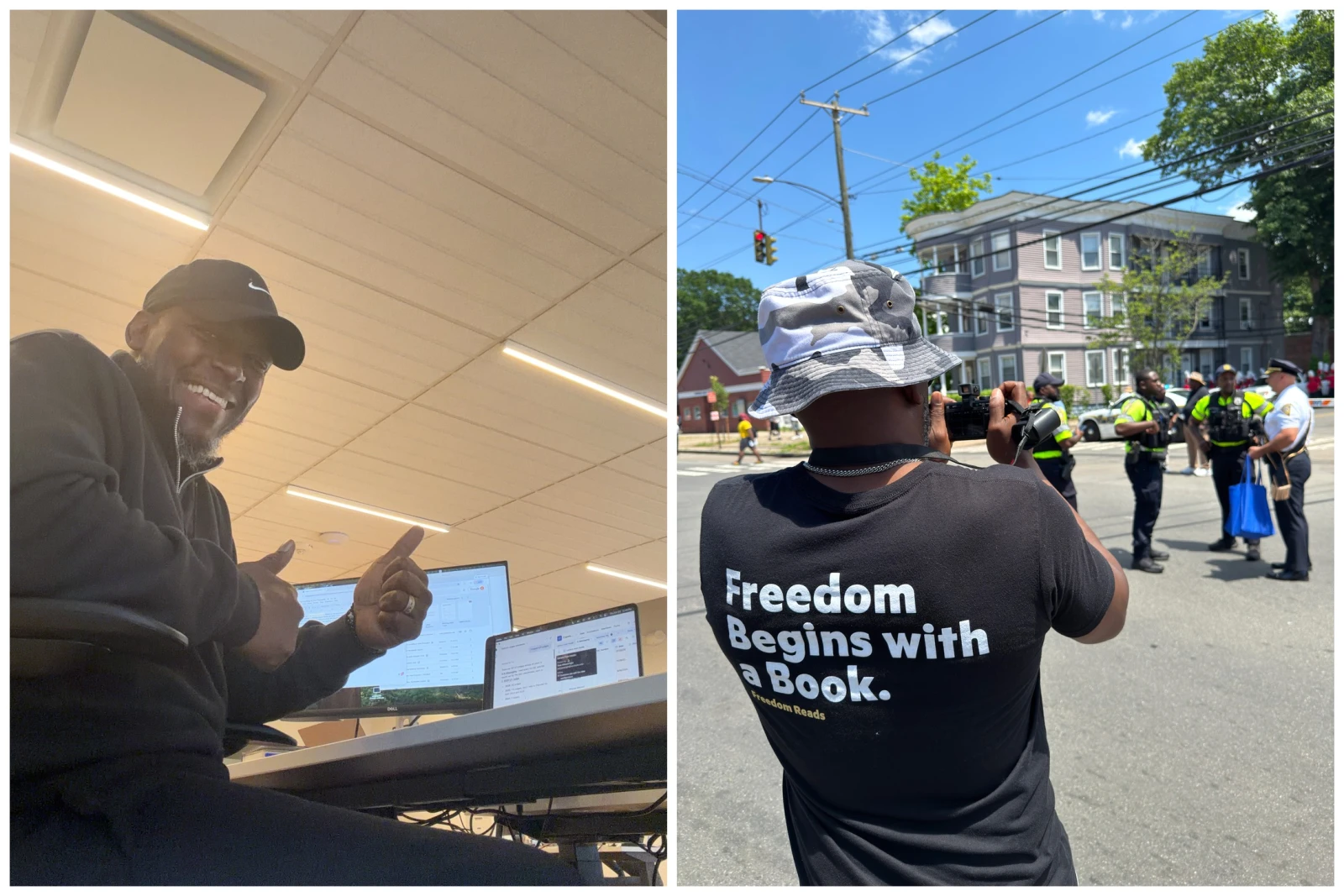
I have been learning. The equation in my mind is (learning = earning). It is motivation for every day. My role at Freedom Reads as a Communications Associate involves learning at a pace I haven't experienced before. My daily work involves using many different technologies and platforms. Some days, I’m working on two laptops at a time. Navigating between platforms such as Google, Microsoft, Airtable, and Slack, and scheduling and hosting virtual meetings are just a few of the day-to-day activities I have grown comfortable with.
These days, I am truly in my lane; other than my work at Freedom Reads, I run a trauma-informed therapeutic theater/youth performing arts organization. This involves video and photo documentation and digitizing our performances. While preparing for a performance this past spring with a group of kids in Middletown, CT, I came in to find that the CEO had left a Lumix GH5 camera on my desk. The message was clear: learn to use this camera. Soon after, I was in prisons in Missouri, Maryland, New Jersey, California, and Minnesota, capturing powerful images of our work and interviewing library patrons. At San Quentin State Prison, I captured some images of Dwayne’s solo performance, which I am proud of.
I never seriously picked up a camera to take a picture before coming to Freedom Reads. If you'd told me about a digital camera, I would have needed a translator. Now I don’t leave my house without one of the two Panasonic Lumix cameras I own.
In all, my journey from being disconnected to connected to technology is a journey I continue. It parallels my journey of reconnecting to myself, family, and purpose. Every day I still read that “Learn Something” note in my mind. And every day that is what I do. I open my laptop with the intention of connecting, whether literally connecting through a meeting, which is almost daily, or through a story I write, or by publishing Freedom Reads content on the Edovo platform to ensure that those inside have access to our content on their tablets all over the country. The point is that connection is at the heart of the work I do here and beyond. Technology is no longer a roadblock; it is my biggest asset.
March Forth is hitting the road this November! Join us in Washington, DC, for the March On! & 4YE Film Center March Forth Doc Screening, running November 17–19 at 340 Maple Dr SW. Then catch the film on the West Coast at the Portland Art Museum/MacArthur PLUS PLUS Festival, where March Forth screens Sunday, November 22, as part of the festival’s November 19–22 lineup. Don’t miss your chance to see it on the big screen!
By Freedom Read’s Library Patrons
FIRST, Thank You, Reginald Dwayne Betts, and All Team members who had a part in us having these books. To all of you who took time out of your day to come into Western Illinois Corr. Center put together the "Freedom Libraries" again for all of us. Coming from someone who is dyslexic, I have been told most of my life that, "I was just acting out or not putting in the effort to learn." Well I overcame and earned my Master's! Please use this letter to help others overcome as well. "You too can overcome!!!" Take it from me, Amolto, M.A., NORTH PARK SRA Seminsky Alumnus.
Amatto
Western Illinois Correctional Center, IL
Hello, my name is Floyd. Yesterday, something wonderful happened here. Your team brought a Ray of Hope into this place. Because of the staff shortage here, the Law Library and General Library are closed for many accounts. But thanks to you and your team, men here can now read books in their cells. "THANK YOU SO VERY MUCH"I came into this system at the age of 20. I am now 65 years young. Books have been my Teacher here in custody; my eyes are open, and so is my mind. From being a Band Coordinator in Pontiac C.C. and reading Music, to learning how to play the Bass Guitar. Then, playing my instrument for the Gospel Choir, books have taken me traveling all over the world.
Floyd
Western Illinois Correctional Center, IL